
Heart Rate vs VO2 Max vs HRV: Which Is the Most Useful?

Key Takeaways
- VO2 max is the strongest predictor of how long you'll live — stronger than smoking, blood pressure, or diabetes. But it's not the most practical metric on your watch.
- Resting heart rate is the one to actually track. It's the most accurate, requires zero effort, and responds to lifestyle changes within weeks.
- The same actions improve all four. Regular aerobic exercise — walking, cycling, swimming — moves every dial at once.
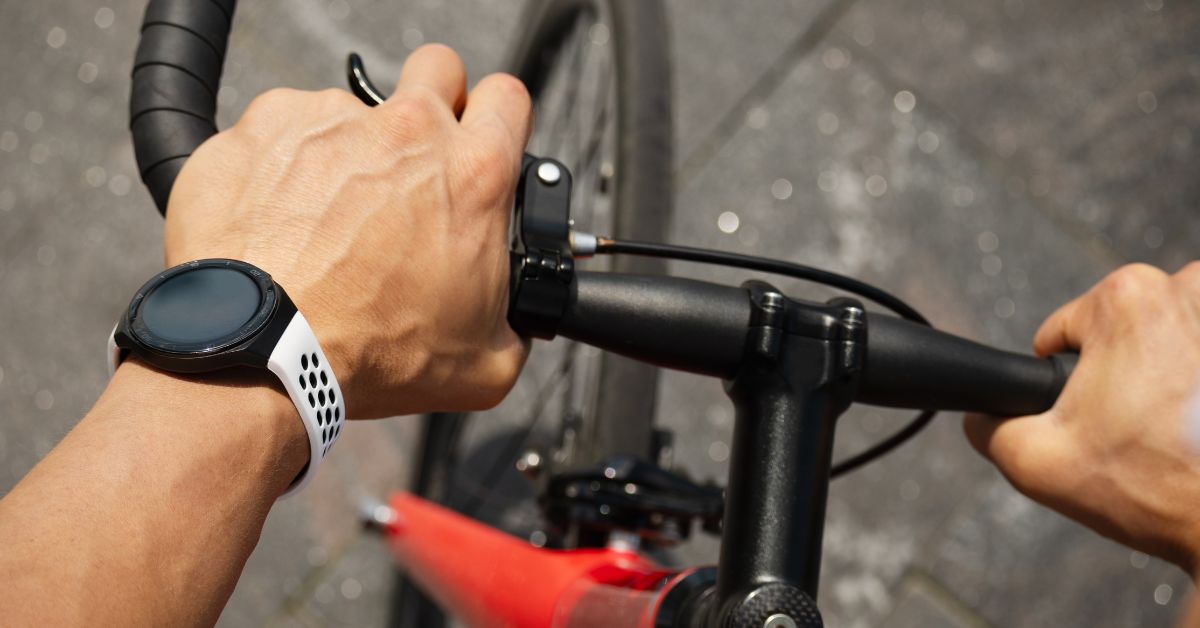
Your smartwatch is quietly tracking your heart in at least four different ways right now. Resting heart rate. VO2 max. Heart rate variability. Heart rate recovery.
They all claim to say something about your health. But which one should you actually pay attention to?
Short answer: they all predict longevity — but not equally. And the one that predicts it most strongly isn't the most useful one to track day to day.
In this article, I'll walk you through what each metric measures, rank them by how strongly they predict longevity, then rank them again by how practical they are on a smartwatch. I'll also explain why the same simple actions improve all four at once, and what other factors affect your readings.
First, a quick bit of science. Because these four metrics are more connected than they appear.
Four Windows Into the Same Engine
Your cardiovascular system is your engine — lungs taking in oxygen, heart and blood vessels delivering it, muscles using it for energy. Everything from climbing stairs to fighting infection depends on how well that system works.
When you get fitter, the engine changes. Your heart gets stronger, pumping more blood per beat. You grow more blood vessels in your muscles. Your mitochondria — the power plants inside your cells — multiply and work more efficiently. And your nervous system shifts, with the calming, restorative branch becoming more dominant.
Each of the four metrics on your watch reads a different part of this. Resting heart rate reflects how hard your heart works when it's doing nothing. VO2 max reflects the total capacity of the system under full load. HRV reflects how well your nervous system fine-tunes things in the background. And heart rate recovery reflects how quickly your body switches from effort to rest.
Four different ways to assess the same engine. They tend to improve together — but they can diverge. A bad week of sleep can tank your HRV without touching your VO2 max. Beta-blockers can lower your resting heart rate without any fitness change.
So which metric tells you the most?
The Longevity Ranking
All four metrics predict mortality. But the strength of the evidence varies enormously.
#1: VO2 max
VO2 max measures the maximum oxygen your body can use during all-out exercise — lungs, heart, blood vessels, and mitochondria all working at full capacity.
The evidence behind it is the strongest of the four, and it's not close. A study of over 122,000 people at the Cleveland Clinic found the least fit group had five times the mortality risk of the fittest. To put that in context, low fitness was a bigger risk factor than smoking, diabetes, or coronary artery disease.
A separate study of 750,000 veterans found roughly a 14 per cent reduction in mortality for each small improvement in fitness. That held at every age, in both sexes. I've written a deeper dive into VO2 max by age if you want to see where your number sits.
#2: Resting heart rate
At rest, your body needs about five litres of blood per minute. A fit heart pumps around 100 millilitres per beat, so it needs about 50 beats. An unfit heart pumps around 70 millilitres per beat, so it needs about 71. Same job, fewer beats.
A meta-analysis of 1.2 million people found every 10-beat increase raised mortality risk by 9 per cent. Above 80 carried a 45 per cent higher risk.
What makes resting heart rate particularly interesting is that it predicts mortality independently of VO2 max. A 16-year study of nearly 3,000 healthy men found that elevated resting heart rate remained a risk factor even after accounting for physical fitness. It's telling you something VO2 max doesn't fully capture.
On average, 60 to 70 appears optimal. Regular exercisers commonly sit in the 50s or 40s. Persistently above 80 is worth mentioning to your doctor.
#3: Heart rate recovery
When you exercise, your muscles need more oxygen — so your heart speeds up. When you stop, the demand drops and your heart slows back down. In a fit person, that slowdown is fast. In someone who's deconditioned, it's sluggish.
Heart rate recovery measures how many beats per minute your heart rate drops in the first 60 seconds after you stop.
A study in the New England Journal of Medicine found that a drop of 12 beats or fewer roughly doubled the risk of dying.
A separate study found heart rate recovery predicted death more strongly than the severity of coronary artery blockages seen on imaging. How well your nervous system controls your heart seems to matter as much as how clear your arteries are. I've covered heart rate recovery in detail here.
#4: HRV
If your heart beats 60 times per minute, you'd think there's exactly one second between each beat — a thousand milliseconds. But there isn't. One gap might be 1,020 milliseconds, the next 980, the next 1,010. That variation is your heart rate variability, and more variation is generally a sign of health — it means your nervous system is actively fine-tuning your heart rhythm beat by beat.
A meta-analysis of over 38,000 people confirmed lower HRV predicts higher mortality. But in healthy populations, the effect is the weakest of the four, and it adds very little information on top of what resting heart rate is already telling you.
Despite decades of research, HRV hasn't been adopted into mainstream clinical guidelines. It remains primarily a consumer wearable feature.
Where it does have genuine value is as a day-to-day recovery guide. It's sensitive to sleep, stress, alcohol, and illness. If your weekly average drops well below your personal baseline, that's a useful signal your body needs rest. I've written a full guide to understanding your HRV if you want to go deeper. But for predicting long-term health, the other three carry more weight.
Want the complete framework?
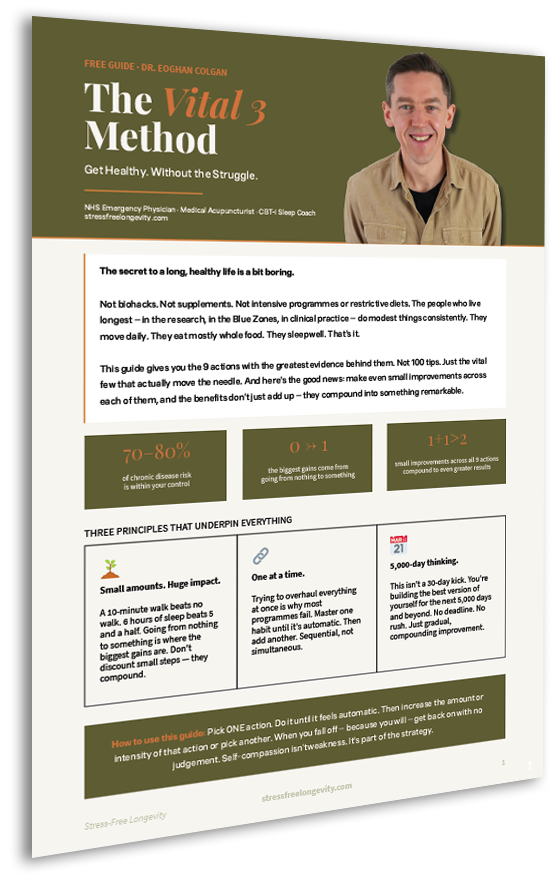
Get "The Vital 3 Method" free guide — 9 evidence-based principles across Sleep, Nutrition, and Exercise that improve your health whether you track these metrics or not.
What Improves All Four
Because these metrics all measure the same engine, the same actions improve all of them. You don't need four different strategies.
Aerobic exercise is the biggest lever. Walking, cycling, swimming, dancing — anything that gets you a little out of breath. This is what strengthens your heart, grows blood vessels, multiplies mitochondria, and strengthens the vagal brake. Nothing else comes close for these four metrics.
Strength training has real benefits — muscle mass, bone density, metabolic health — but it doesn't move these particular dials much. You need the aerobic component.
Weight loss helps too. Carrying extra weight puts chronic strain on your cardiovascular system. Losing weight — even modest amounts — lowers resting heart rate, improves heart rate recovery, and can shift VO2 max upward. Exercise helps with that, so these compound.
Sleep and stress matter more than you'd think. The parasympathetic system that drives all four metrics is suppressed when you're chronically sleep-deprived or stressed. Improving either will improve your numbers — particularly HRV and resting heart rate.
How much exercise do you need?
The relationship between exercise and mortality isn't a straight line. It's a curve, steep at the start. A landmark study found that moving from the least fit group to the next — from doing nothing to doing something regularly — reduced mortality by 60 per cent. After that, more is still better, but the returns diminish sharply.
If you're currently inactive, starting anything is the single most powerful health decision you can make. Walking counts. The key is doing it consistently.
For those who want more: three to four moderate sessions a week builds a strong aerobic base. Adding one harder session — four minutes of effort followed by four minutes of recovery, repeated four times — is the most time-efficient way to push VO2 max higher.
But the first hour of weekly exercise delivers dramatically more health benefit than the tenth.
A Note on Medications and Age
If you're over 40 and tracking these metrics, a few things are worth knowing.
Beta-blockers — among the most commonly prescribed medications for this age group — change the picture. They lower resting heart rate and increase HRV, making both look artificially healthy. At the same time, they reduce VO2 max by 5 to 15 per cent. If you're on one, your numbers are still useful — just track your own trend rather than comparing to population averages.
Antidepressants affect these metrics too. SNRIs and tricyclic antidepressants tend to raise resting heart rate and lower HRV. SSRIs have a milder effect. These changes generally reverse when the medication is stopped.
Alcohol raises resting heart rate and suppresses HRV in a dose-dependent way. A couple of drinks will move the numbers. Recovery takes one to three days.
Age affects the four metrics differently. HRV declines the most — even lifelong exercisers see it drop, though much less dramatically than sedentary people. VO2 max drops roughly 10 per cent per decade, but more than half of that is inactivity, not ageing. Resting heart rate barely changes with healthy ageing — one reason it's such a reliable metric at any age.
For women, menopause accelerates the decline in VO2 max and can lower HRV. Normal physiological shifts — not signs that something is wrong.
The Practical Ranking
There are some practicalities to how these metrics are measured on a smartwatch. For that reason, here's how I'd rank them for everyday use.
#1: Resting heart rate
This requires zero effort — it's measured passively from your overnight data. Accuracy is within 1 to 3 beats of clinical measurement, with no meaningful difference between devices. There are clear thresholds you can act on today. And it responds to lifestyle changes faster than any other metric — typically within two to four weeks of starting exercise.
If you track one thing, track this.
#2: VO2 max
The strongest longevity predictor, but your watch only estimates it — with 5 to 16 per cent error depending on the device. Different devices measure it differently, and it needs outdoor GPS-tracked activity to update. The absolute number may not be right, but the trend over months is reliable. And the trend is what matters. Expect to see meaningful movement after two to three months of consistent exercise.
#3: HRV
HRV is also measured passively during sleep, which is convenient. But it too is measured differently across devices, making it impossible to compare numbers between them. And it's the most volatile metric — swinging 20 to 50 per cent day to day based on sleep, stress, and what you did last night. A single reading tells you nothing. A seven-day rolling average does provide useful data. It's also the slowest to respond to lifestyle changes — three months or more before you'd see a meaningful shift.
#4: Heart rate recovery
Heart rate recovery has strong evidence, but it's the hardest to capture reliably. You need a logged workout at decent intensity, ended at peak exertion — and wrist sensors are at their least accurate at exactly that moment. If you forget to stop the workout before you start cooling down, the reading is unreliable. When it is measured well, you'd expect to see improvement within four to six weeks of regular exercise.
For me, this makes it the least practical to measure.
In summary: all four metrics respond to the same lifestyle improvements. You don't need to follow all four. Resting heart rate and VO2 max are the most practical and reliable.

When to See Your Doctor
Most variation in these metrics is harmless. But certain patterns are worth acting on.
Resting heart rate consistently above 100 at rest is tachycardia and warrants investigation. Persistently above 85 is associated with meaningfully higher risk. At the other end, below 40 with dizziness or fainting is worth checking — though for most regular exercisers, a low rate is a good sign.
Heart rate recovery of 12 beats or fewer at one minute after exercise — if consistent across several sessions — is the threshold the research flags as abnormal.
A sustained, unexplained shift in any metric over several weeks is worth mentioning to your doctor. Especially alongside symptoms — unexplained fatigue, exercise intolerance, dizziness, or palpitations.
A single bad reading means nothing. A bad night's sleep, a stressful day, dehydration — any of these will move the numbers temporarily. What matters is the pattern over weeks.
One more thing. The most clinically validated feature on your smartwatch isn't any of these four metrics. It's irregular rhythm detection. If your watch flags possible atrial fibrillation, take that seriously. Catching AFib early prevents strokes.
At any age, symptoms matter more than numbers.
The Bottom Line
Your smartwatch tracks four metrics that measure the same underlying engine. VO2 max tells you the most about your long-term health. Resting heart rate is the most useful day to day. Heart rate recovery is underappreciated. HRV gets more attention than it deserves.
But the real insight is simpler than any ranking. The same actions improve all four. Regular aerobic exercise — even just walking — moves every dial. And the biggest benefit comes right at the start, from doing nothing to doing something.
If the numbers motivate you, use them. If they stress you out, close the app and go for a walk.
Ready to Improve What Actually Matters?
These metrics reflect your exercise, sleep, and stress levels. Get the foundations right and the numbers take care of themselves.
Get the complete Vital 3 Method guide — free:
- The 3 highest-impact changes for each pillar (9 total)
- The Build Good Habits framework to make them stick
- Start with one, build from there — no overhaul required
No spam. Unsubscribe anytime.
Frequently Asked Questions
Sources
- Mandsager K et al. (2018). Association of Cardiorespiratory Fitness With Long-term Mortality. JAMA Network Open. PubMed
- Kokkinos P et al. (2022). Cardiorespiratory Fitness and Mortality Risk Across the Spectra of Age, Race, and Sex. Journal of the American College of Cardiology. PubMed
- Zhang D et al. (2016). Resting heart rate and all-cause and cardiovascular mortality in the general population: a meta-analysis. CMAJ. PubMed
- Jensen MT et al. (2013). Elevated resting heart rate, physical fitness and all-cause mortality. Heart. PubMed
- Cole CR et al. (1999). Heart-rate recovery immediately after exercise as a predictor of mortality. New England Journal of Medicine. PubMed
- Qiu S et al. (2017). Heart rate recovery and risk of cardiovascular events and all-cause mortality. Journal of the American Heart Association. PubMed
- Jarczok MN et al. (2022). Heart rate variability in the prediction of mortality. Neuroscience and Biobehavioral Reviews. PubMed
- Botek M et al. (2013). A comparison between heart rate and heart rate variability as indicators of cardiac health and fitness. Frontiers in Physiology. PubMed
- Blair SN et al. (1989). Physical fitness and all-cause mortality: a prospective study of healthy men and women. JAMA. PubMed
Medical disclaimer
This content is for informational purposes only and is not intended as medical advice. Always consult your healthcare provider before making changes to your health routine. What works for one person may not work for another — this is a roadmap, not a prescription.
About Dr. Eoghan Colgan
Emergency medicine physician researching what actually works for longevity. I interview world-class experts in health and longevity and test everything personally. Everything I teach is what I'm implementing myself. More about me →

Related Articles

How to Calculate Protein Intake: A Doctor’s Simple Rule
How to Calculate Protein Intake: A Doctor’s Simple Rule Key Takeaways The simplest way to […]

Does Creatine Cause Hair Loss? What the Evidence Shows
Does Creatine Cause Hair Loss? What the Evidence Shows Key Takeaways No study has shown […]

Creatine Side Effects: What’s Real and What Isn’t
Creatine Side Effects: What’s Real and What Isn’t Key Takeaways Creatine is one of the […]