
Does Creatine Cause Hair Loss? What the Evidence Shows
Key Takeaways
No study has shown that creatine causes hair loss. The one trial that measured hair found no change.
Shedding after starting creatine usually has another cause - your age, or a change in diet or training two to three months earlier.
3 to 5 grams of plain creatine monohydrate a day is all you need. Skip the loading phase.
Does creatine cause hair loss? It's a worry that puts a lot of people off taking it.
The short answer is no, not on the evidence we have. The idea comes from a single study in 2009 that never looked at anyone's hair. The only trial that has actually measured hair found no difference.
But plenty of people are sure it happened to them, and there are good reasons for that too.
I'm an emergency medicine doctor, and in this article I'll walk you through what the research shows, why people notice shedding when they start creatine, who might still want to be careful, and what to do if you're worried.
Does Creatine Cause Hair Loss? What the Research Shows
The worry started from one study in 2009.
Twenty college rugby players took creatine for three weeks, and a hormone linked to baldness, DHT, rose by 56%. DHT is made from testosterone, and it's the hormone behind male pattern baldness. So the worry was that it would lead to hair loss.
But nobody looked at their hair.
And no study since has found that same rise. For seventeen years, this worry persisted.
It took until 2025 for anyone to check hair directly. Researchers gave men aged 18 to 40 who lift weights either 5 grams of creatine or a placebo every day for 12 weeks. Dermatologists then measured their hair - how many hairs, how thick, and how many were still growing.
Thirty-eight men finished the study. There was no difference between the groups, in their hair or in their DHT. It's also a small study, but the largest and most detailed we have, and it's the only one that has measured hair.
Why Do So Many People Say Creatine Made Their Hair Fall Out?
There are three common explanations, and none of them needs the creatine.
Age. Pattern hair loss is common, and it gets more common every decade. In one US study, 16% of men aged 18 to 29 had moderate or more extensive hair loss. Among men aged 40 to 49, it was 53%.
That's about half of men over 40, with or without creatine.
In women it starts later: about a quarter show signs by 49, and around four in ten by 69.
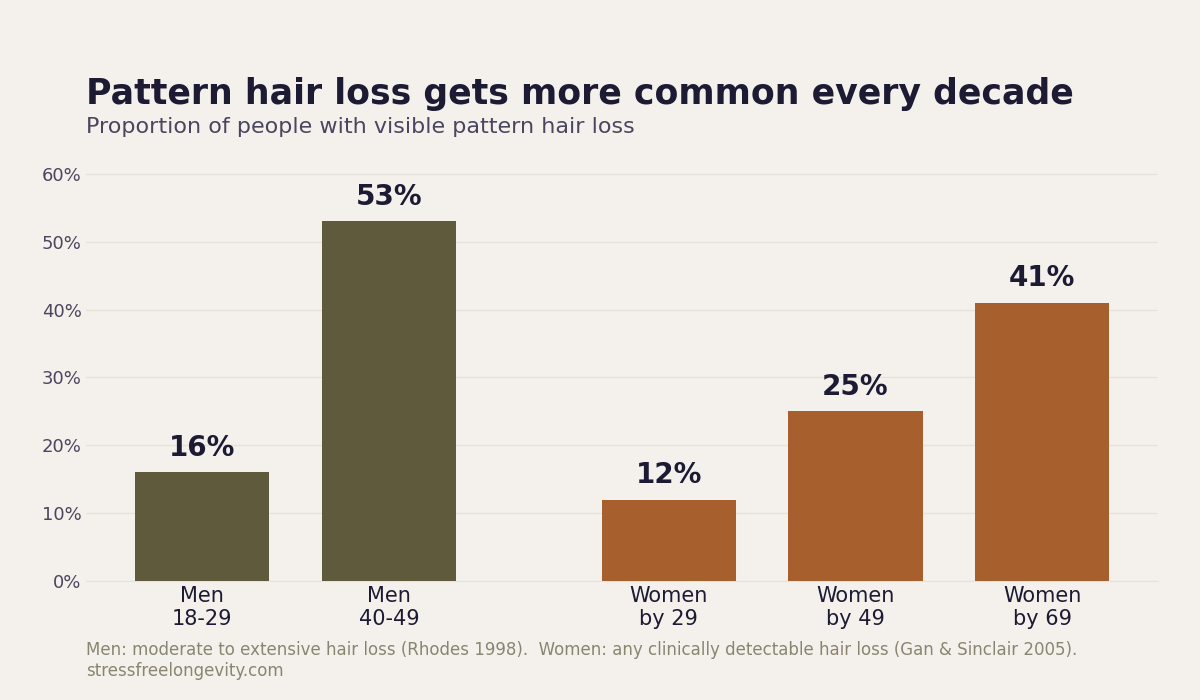
If you start creatine over 40 and then take a close look in the mirror, there's a good chance you'll find thinning you hadn't noticed before. It was likely already happening.
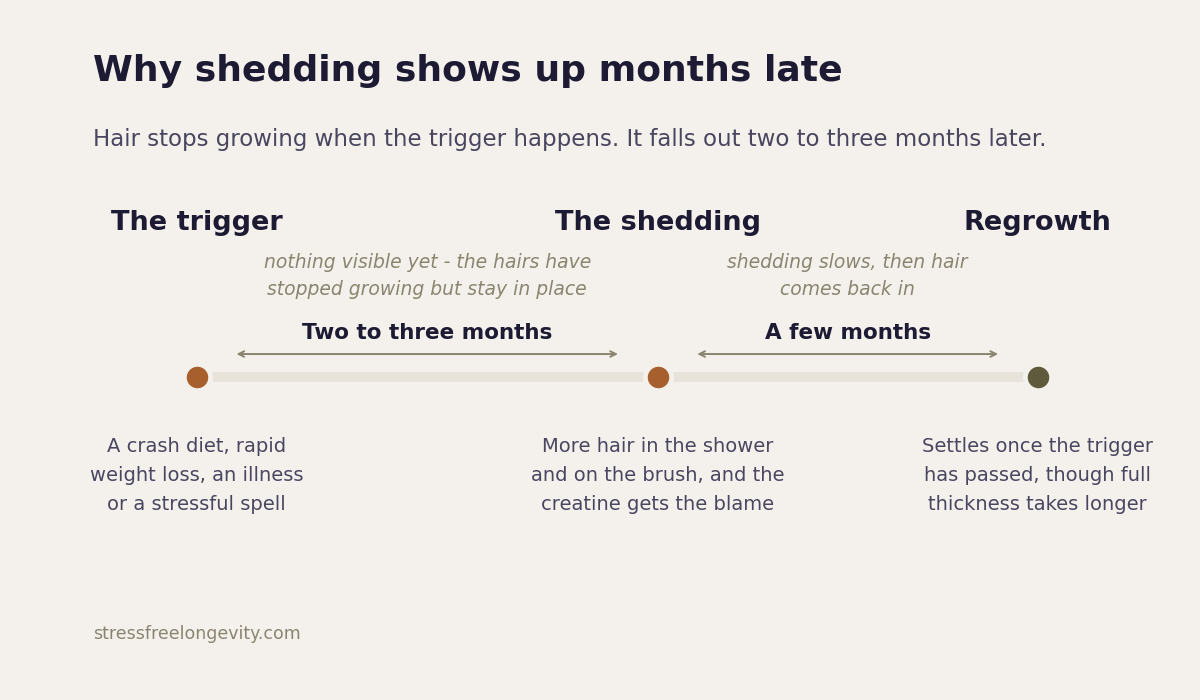
Something else changed. When your body goes through a shock - a crash diet, losing weight quickly, an illness, a stressful few months - a large number of hairs stop growing and switch to resting at the same time. They don't fall out straight away. They stay put for two to three months, then shed together.
People rarely start creatine on its own. It usually comes with a new training plan, often a new diet, sometimes a push to lose weight. Two or three months later the hair starts coming out in the shower, and the creatine - the newest thing - gets the blame.
Normal shedding. Losing 50 to 100 hairs a day is normal. On the days you wash your hair, a few days' worth can come out at once.
None of this proves creatine has never affected anyone's hair. But it explains why so many people are convinced it does.
Could Creatine Still Affect Some People?
So could it still affect some people? It hasn't been ruled out. The 2025 trial was small, and 12 weeks is short when pattern hair loss develops over years. It only included men under 40. And nobody checked whether the men were genetically prone to baldness. That last point matters most, because of how DHT thins hair.
Whether DHT thins your hair depends mostly on your hair follicles, not on how much DHT is in your blood. In people prone to pattern baldness, the follicles on the top and front of the head are unusually sensitive to it. DHT gradually shrinks them, so each new hair grows back finer and shorter than the last, until the scalp starts to show through. That sensitivity is largely inherited, which is why baldness runs in families.
If creatine affects anyone's hair, it would be people whose follicles are already sensitive, where a small rise in DHT might speed things up. But the 2025 trial found no rise in DHT at all. So far, there's nothing to suggest it happens.
A six-month trial was registered in 2020 to settle it, and never ran.
Want the complete framework?
Get "The Vital 3 Method" free guide - the system I use to build sustainable health habits across Sleep, Nutrition, and Exercise.
So What Should You Do?
If you're healthy and strength training, nothing here is a reason to avoid creatine. Here's how to take it.
Take 3 to 5 grams of creatine monohydrate a day. That's the dose the research uses, and it's all you need.
Skip the loading phase. That's the advice to take 20 grams a day for the first week. At 3 grams a day your muscles reach the same level in about four weeks, and loading is where the 2009 DHT rise came from.
Stick to monohydrate. Don't pay extra for "hair-safe" versions like creatine HCl. There's no evidence any form is kinder to your hair, and monohydrate is the one all the research was done on.
Personally, I've taken creatine for two months and haven't noticed any change.
If baldness runs in your family, take a photo of your hairline and the crown of your head before you start, in the same light, and compare in six months. If you're worried, see a dermatologist. There are treatments that work, and they'll do far more for your hair than avoiding creatine.
If your hair is already shedding, look back two to three months. A new diet, weight loss, an illness or a stressful spell is a more likely cause than the creatine. It's also worth seeing your GP, because low iron and an underactive thyroid are both common, treatable causes of shedding, and a simple blood test checks for both.
If you're wondering whether creatine is worth taking at all, I've covered that in my post on creatine over 50.
I look at the recent concerns around Creatine and cancer spread in the following video:
The Bottom Line
The idea that creatine causes hair loss comes from one small study that measured a hormone, not hair. When someone finally measured hair, nothing had changed.
If your hair is thinning, look at your age, your family and the last few months before you look at the tub.
And if hair is the only thing that's stopped you taking creatine, take it. Just remember it only adds a little on top - the strength training is what builds the muscle.
Creatine Is Just a Small Part
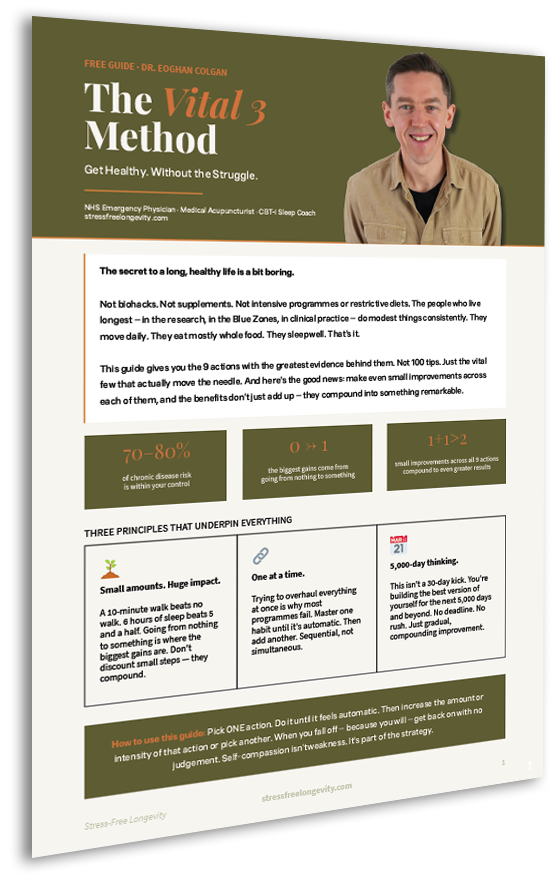
The guide covers the part that does the work: the strength training, and the habits that keep you doing it.
- The 9 highest-impact actions across Sleep, Nutrition, and Exercise
- A two-session-a-week strength routine that fits a busy life
- The Build Good Habits framework to make it stick
No spam. Unsubscribe anytime.
Frequently Asked Questions
Sources
van der Merwe J, Brooks NE, Myburgh KH (2009). Three weeks of creatine monohydrate supplementation affects dihydrotestosterone to testosterone ratio in college-aged rugby players. Clinical Journal of Sport Medicine. PubMed
Lak M, Forbes SC, Ashtary-Larky D, et al. (2025). Does creatine cause hair loss? A 12-week randomized controlled trial. Journal of the International Society of Sports Nutrition. Full text
Antonio J, Candow DG, Forbes SC, et al. (2021). Common questions and misconceptions about creatine supplementation: what does the scientific evidence really show? Journal of the International Society of Sports Nutrition. Full text
Rhodes T, Girman CJ, Savin RC, et al. (1998). Prevalence of male pattern hair loss in 18-49 year old men. Dermatologic Surgery. PubMed
Gan DC, Sinclair RD (2005). Prevalence of male and female pattern hair loss in Maryborough. Journal of Investigative Dermatology Symposium Proceedings. PubMed
Medical Disclaimer
This content is for informational purposes only and is not intended as medical advice. Always consult your healthcare provider before making changes to your health routine. What works for one person may not work for another — this is a roadmap, not a prescription.
About Dr. Eoghan Colgan
Emergency medicine physician researching what actually works for longevity. I interview world-class experts in health and longevity and test everything personally. Everything I teach is what I'm implementing myself. More about me →

Related Articles
Creatine Side Effects: What’s Real and What Isn’t
Creatine Side Effects: What’s Real and What Isn’t Key Takeaways Creatine is one of the […]

The Safest Sleep Aid: What to Take (And What to Stop)
The Safest Sleep Aid: What Works (And What to Stop) Key Takeaways No pill solves […]

Types of Magnesium: What Actually Works (and What Doesn’t)
Types of Magnesium: What Actually Works (and What Doesn’t) Key Takeaways The form on the […]