
Longevity Tips That Actually Work (No Extreme Protocols)

Key Takeaways
- 75-80% of your longevity is lifestyle, not genetics. You have far more control than you might think.
- It's never too late to start. Your 40s and 50s are especially high-leverage — but people who begin in their 60s, 70s, even 80s see meaningful benefits.
- The fundamentals beat extreme protocols. Sleep, muscle, movement, real food — done consistently — outperform million-dollar biohacking regimens.
You've seen the headlines. The 4am wake-ups. The 100-pill regimens. The tech entrepreneur spending $2 million a year trying not to die.
And maybe you've wondered: am I falling behind because I'm not doing all that?
I'm a medical doctor who investigates health and longevity. I interview world-class experts in sleep, nutrition, and exercise. I read the research. I test everything personally.
Here's the bottom line: the fundamentals win. Every time. Biohacking sounds really exciting but there is no evidence it makes any meaningful difference.
Here are the longevity tips that actually work. No extreme protocols required.
Why the Fundamentals Win
75-80% of your longevity is determined by lifestyle, not genetics.
This comes from the Danish Twin Registry — one of the most robust longevity studies ever conducted. Researchers analysed nearly 3,000 twin pairs and found that genes account for only 23-26% of lifespan variation. The rest is how you live.
And yet, the longevity industry would have you believe otherwise. It profits from complexity — from the idea that you need expensive interventions, stacks of supplements, and biohacking protocols to move the needle.
There's a lot of money to be made in longevity.
The research tells a different story.
Eric Topol is one of the most respected figures in longevity science — executive vice president of Scripps Research, author of Super Agers. His conclusion after decades of study:
"No pill, supplement, hormone, or any intervention has been shown to reverse, stop, or even slow aging in humans."
Bryan Johnson, the tech entrepreneur spending $2 million a year on his Blueprint protocol, has already abandoned several interventions he once championed — plasma transfusions (no benefits observed), growth hormone (elevated blood glucose), and rapamycin after nearly five years due to lipid changes and blood sugar problems.
The cutting edge keeps cutting back.
What has been shown to work, over and over again? The boring stuff. Sleep. Movement. Food.
A 2025 UK Biobank study of 60,000 participants found that small, combined improvements in sleep, exercise, and diet can add over 9 years of healthy life. The minimum effective doses were shockingly modest: 5 extra minutes of sleep, 2 extra minutes of moderate exercise, half a cup of vegetables daily.
You're probably closer than you think to transforming your life trajectory.
Professor Luc van Loon, who has spent 35 years researching nutrition and physical activity, put it perfectly:
"I spent nearly 40 million euros of research money in the last 30, 35 years to basically provide clinical evidence that my mom was right on most things. Have three meals a day, be physically active in between those meals. Eat a diverse diet."
That's not going to sell books. But it's what the evidence supports.

The 5 Longevity Tips That Actually Matter
If you do nothing else, do these 5 things. These are the actions that have the greatest impact on long-term health.
Tip 1: Prioritise sleep
Sleep is when your body repairs. It's when your brain clears metabolic waste, your muscles recover, your immune system rebuilds, and your hormones reset. Cut it short and everything suffers — your metabolism, your mood, your ability to think clearly, your risk of chronic disease.
A 2025 study found that insufficient sleep has a stronger correlation with lower life expectancy than diet or exercise. Only smoking showed a stronger link to mortality.
Most adults need somewhere between 6 and 9 hours. The exact number varies by person, and it changes as you age. The goal isn't to hit a magic number — it's to wake feeling reasonably rested most days.
But here's what the research emphasises even more than duration: regularity.
A UK Biobank study found that sleep regularity predicts mortality more strongly than sleep duration. The most consistent sleepers — those who went to bed and woke at similar times each day — had 20-48% lower all-cause mortality than the most irregular sleepers.
Your body clock doesn't know it's the weekend. Staying up late Friday and sleeping in Saturday creates a kind of jet lag that takes days to recover from.
The practical takeaway: pick a wake time that works for your life and stick to it — including weekends.
Explore my sleep content →
Tip 2: Protect your muscle
Muscle isn't just about strength or appearance — it's a metabolic organ that influences almost everything: blood sugar regulation, inflammation, immune function, bone density, and how well you recover from illness or injury.
Professor Keith Baar, a molecular exercise physiologist at UC Davis, shared a striking statistic with me:
"If you are in the strongest third of the population, you are half as likely to die between 40 and 60 as somebody who's in the weakest third of the population."
50% mortality reduction. That's a bigger effect than virtually any medical treatment.
After 40, you lose approximately 1% of muscle mass per year without intervention. By 80, that's 40% of your muscle gone. This isn't cosmetic — it's functional. It's the difference between climbing stairs at 75 and needing help to stand.
Here's what to do about it.
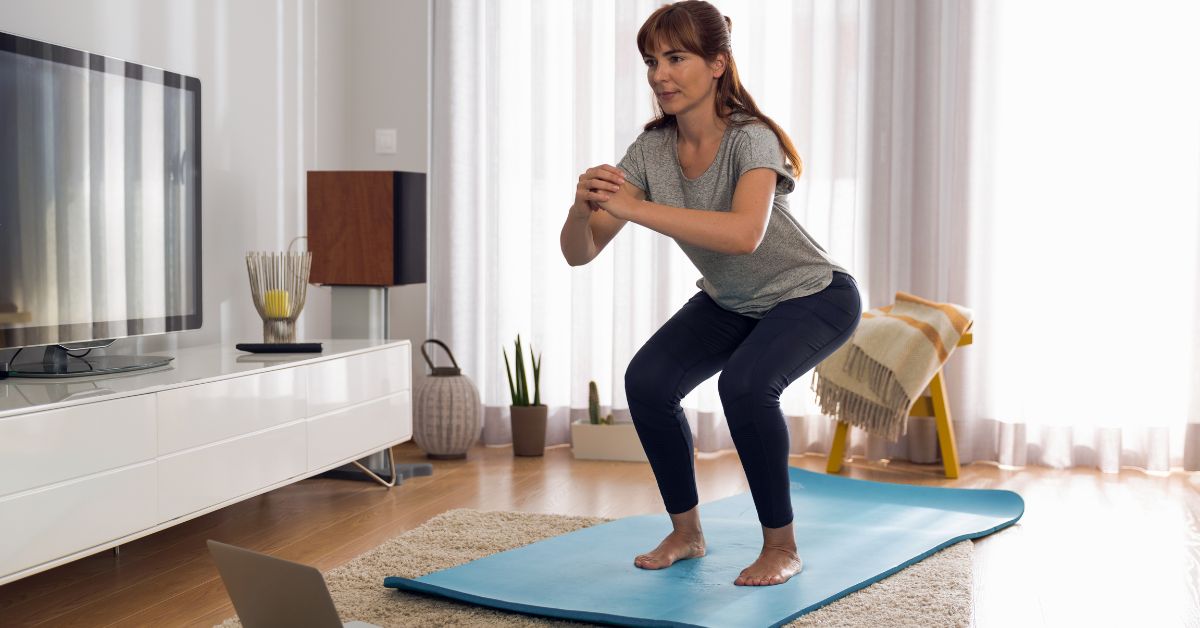
Two to three strength sessions per week is enough. You don't need a gym. You don't need complicated workouts. You need consistency. Find a simple routine that works the core muscle groups (chest, back, core, legs). Squats, lunges, push-ups are particularly good. A single session could be as little as 15-20 minutes.
And it's never too late. Studies show previously sedentary people in their 70s and 80s can build significant muscle when they start training — gains that meaningfully improve strength and independence.
Nutrition matters too — and the two work together.
Eating protein alone stimulates muscle building. But when you combine protein with exercise, more of that protein gets used for muscle growth.
20-25g of protein stimulates muscle building for 4-6 hours after a meal, so aim for that amount at each meal.
What does 20g actually look like?
- 2-3 eggs
- 70-100g of meat, fish, or chicken
- Two big glasses of milk
- A cup of Greek yoghurt
- A coffee cup full of nuts
Professor Leigh Breen, who studies muscle physiology, noted where most people fall short:
"Breakfast and lunch tend to be problematic areas for older adults in terms of protein consumption. They can sometimes be grain or carbohydrate-heavy."
If your breakfast is toast and jam, or cereal with a splash of milk, you're starting the day in a protein deficit. Add eggs. Add Greek yoghurt. Add nuts and berries. It doesn't need to be complicated.
Strength training builds the muscle. Protein feeds it. Together, they're one of the highest-impact interventions for longevity — and the benefits multiply when you do both.
Tip 3: Get out of breath occasionally
Your cardiovascular fitness — how efficiently your heart and lungs deliver oxygen to your body — is strongly linked to how long you'll live.
A 2024 meta-analysis covering 20.9 million observations found that even a modest improvement in cardiovascular fitness reduces all-cause mortality by 11-17%. The threshold for that improvement? About 150 minutes per week of moderate activity.
The key is getting slightly out of breath — what exercise scientists call "Zone 2," where you can hold a conversation but it takes a little effort. Walking works. Cycling works. Swimming works. The specific activity matters far less than doing it consistently. Pick something you'll actually do three to five times per week. Something you could do again tomorrow without dreading it.
Walking is definitely underrated. It's low-injury, requires no equipment, and can be stacked onto daily life — walking to the shops, taking calls while walking, a 20-minute loop after dinner. Cumulatively, this delivers comparable mortality benefits to more gruelling approaches. You can find out more about the benefits of walking here.
The goal is to make movement a default part of your week, not a special event requiring motivation.
Want the complete framework?
These five tips are the starting point. My full system — The Vital 3 Method — covers 9 principles across Sleep, Nutrition, and Exercise, plus the habit framework to make them stick.
Tip 4: Eat more fibre
This one rarely makes the headlines, but the evidence is hard to ignore.
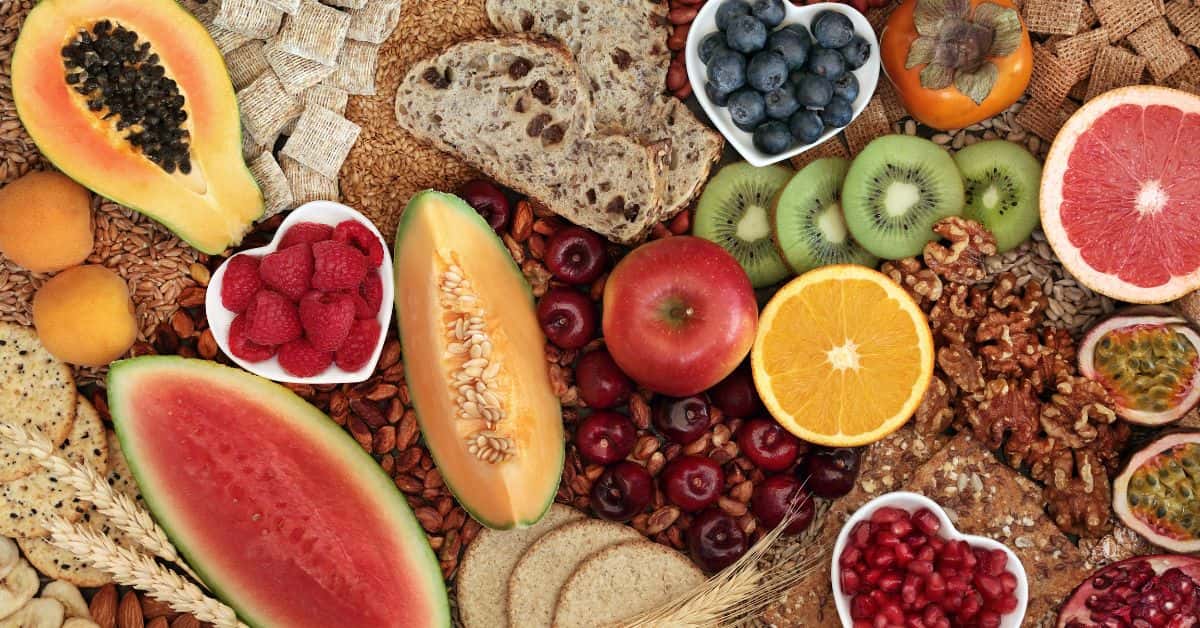
A meta-analysis found that people with the highest fibre intake had 23% lower all-cause mortality than those with the lowest. Each additional 10g of fibre per day — roughly a cup of beans or two apples — reduced mortality by 10%.
Fibre feeds your gut microbiome, stabilises blood sugar, reduces inflammation, and even limits how many calories your body absorbs from food.
Most people get about 15g daily. The target is closer to 30g.
The practical fix is simpler than you think. Here are some of the best sources:
- Legumes: A cup of lentils has 15g of fibre. Beans, chickpeas, and black beans are all in the same range.
- Vegetables: Broccoli, carrots, brussels sprouts — a couple of portions adds 5-10g.
- Whole grains: Swap white rice for brown, white bread for wholemeal. Oats at breakfast.
- Fruit: An apple or pear has about 4-5g. As does a handful of raspberries.
- Nuts and seeds: A handful of almonds or chia seeds adds 3-4g.
You don't need to overhaul your diet. Just look at what you already eat and ask: where can I add one of these?
An extra portion of vegetables at dinner. Lentils in a soup. Berries on your yoghurt. Small additions compound.
This aligns with what we see in Blue Zones — centenarians don't count fibre grams. They just eat legumes almost daily, vegetables with every meal, and whole foods by default.
5. Cut the empty calories
You don't need to diet. But there are calories in most people's day that aren't doing anything useful — and removing them is easier than you think.
Start with drinks. Sugar-sweetened beverages are linked to a 7-8% increase in mortality per daily serving. Swap the fizzy drink for water. Swap the sugary coffee for black or with a splash of milk. This single change removes hundreds of empty calories without requiring willpower at mealtimes.
Then look at snacks. The mid-afternoon biscuit. The crisps before dinner. These aren't meals — they're habits. Swap them for fruit, nuts, or nothing at all.
This isn't restriction. It's noticing where calories are sneaking in without adding nutrition — and redirecting toward food that actually serves you.
Blue Zone centenarians don't count calories. But they also don't drink fizzy drinks or snack on processed food. Their diets are simple by default.
Small swaps. Big compound effect over decades.
Two things I haven't included here: smoking and social connection.
Smoking is obvious — if you smoke, stopping is the single highest-impact change you can make. Nothing else comes close.
Social connection is less obvious but the research is striking: strong relationships confer a 50% increased likelihood of survival, an effect size comparable to quitting smoking and larger than the effects of obesity or physical inactivity.
I've focused on Sleep, Nutrition, and Exercise because they're where most people have the most room to improve. But take time to nurture the friendships in your life. They matter more than you might think.
It’s Never Too Late to Start
Whatever age you are, whatever shape you're in — this is your starting point. And it's a good one.
Your body responds to the right inputs at any age. People who start exercising in their 50s and 60s after years of inactivity see the same mortality benefits as those who've been active their whole lives. People who begin strength training in their 70s and 80s build meaningful muscle within weeks.
And if you're in your 40s or 50s, the timing is especially powerful. Managing key health behaviours at age 50 adds more than a decade of life expectancy. The choices you make now compound — every year of good habits is a year of returns.
And if you're just starting out, there is great news! The greatest benefits come at the very beginning - going from nothing to something. Do not discount the small wins - going from zero to walking 1km per day, adding one extra portion of vegetables at dinner, or increasing your sleep by 20 minutes each night. These changes are huge!
Start where you are. Start small. Build from there.

Why Simple Feels Hard
If this advice sounds familiar, you might be wondering: why haven't I done it already?
Part of the answer is information overload. Surveys show that 78-80% of people encounter conflicting information about what to eat or avoid. More than half say this makes them doubt their own choices. The result isn't motivation — it's paralysis.
There's also this: complex protocols feel productive. A 47-step morning routine feels like you're doing something. Taking a walk and eating vegetables feels almost too simple to work.
Professor Mike Lean, who has studied nutrition for decades, was blunt:
"I stepped away from all the nonsense that's spoken in the social media and the corruption of science by people who are actually trying to make money out of you."
Simple works. Take Julie Gibson Clark as an example. She's a 55-year-old single mother who held the #2 spot on the Rejuvenation Olympics leaderboard for over a year (prior to a questionable rule change) — the same leaderboard Bryan Johnson created to track biological aging. His monthly cost: $2 million a year. Hers: $108 — a gym membership and basic supplements. Her approach: vegetables, exercise, meditation, consistency.
The fundamentals beat the most expensive biohacking protocol on the planet.
The key to longevity is doing the right things, consistently, for the rest of your life. Not perfectly. Not intensively. Just consistently. Every small action moves you in the right direction.
Want the complete framework?
These five tips are the starting point. My full system — The Vital 3 Method — covers 9 principles across Sleep, Nutrition, and Exercise, plus the habit framework to make them stick.
Making It Stick
Dan Buettner has spent decades studying the world's longest-lived populations. He noticed something about centenarians in Blue Zones:
"None of them tried to live longer."
They didn't optimise. They didn't biohack. They lived lives where healthy choices were the default — walking was transport, meals were shared, real food was normal.
That's the model. Not sporadic bursts of intensity. A lifestyle where you move more, prioritise sleep, and eat more real food.
The shift that makes this work: stop thinking of these actions as things you do and start thinking of them as who you are.
You're not "trying to exercise more." You're someone who moves daily. You're not "on a diet." You're someone who eats real food.
Identity sticks. Willpower doesn't.
The Bottom Line
You don't need a $2 million protocol. You don't need 100 pills. You don't need to wake up at 4am.
You need good sleep. Strong muscles. Regular movement. Real food.
Done consistently. Done imperfectly. Done for decades.
Bryan Johnson spends $2 million a year. Julie Gibson Clark spends $108. She ranked higher.
The science is clear. The fundamentals win.
Ready to Transform Your Health?
Get the complete Vital 3 Method guide — free:
You've just learned the longevity tips that actually matter. But knowing isn't the same as doing.
Get the complete Vital 3 Method guide — free:
- All 9 evidence-based principles across Sleep, Nutrition, and Exercise
- The Build Good Habits framework to make changes stick
- A sustainable approach that works for busy professionals
No spam. Unsubscribe anytime.
Frequently Asked Questions
Sources
- Herskind AM et al. (1996). The heritability of human longevity: a population-based study of 2872 Danish twin pairs born 1870-1900.
- UK Biobank SPAN Study (2025). Sleep, physical activity, and nutrition improvements and life expectancy. eClinicalMedicine.
- Topol E. (2025). Super Agers: An Evidence-Based Approach to Longevity. Scripps Research.
- Holt-Lunstad J et al. (2010). Social relationships and mortality risk: a meta-analytic review. PLoS Medicine.
- Global Cardiovascular Risk Consortium (2025). Risk factor modification at age 50 and life expectancy. New England Journal of Medicine.
- Saint-Maurice PF et al. (2019). Association of leisure-time physical activity across the adult life course with all-cause and cause-specific mortality.
- Reynolds A et al. (2019). Carbohydrate quality and human health: a series of systematic reviews and meta-analyses. The Lancet.
- Malik VS et al. (2019). Sugar-sweetened beverages and mortality. Amer. Heart Assoc. Journal
- Stress-Free Longevity Interviews with Global Experts in Health and longevity
Medical disclaimer
This content is for informational purposes only and is not intended as medical advice. Always consult your healthcare provider before making changes to your health routine. What works for one person may not work for another — this is a roadmap, not a prescription.
About Dr. Eoghan Colgan
Emergency medicine physician researching what actually works for longevity. I interview world-class experts in health and longevity and test everything personally. Everything I teach is what I'm implementing myself. More about me →

Related Articles
What Is a Good Resting Heart Rate? (And Why “Normal” Isn’t the Same as Healthy)
What Is a Good Resting Heart Rate? (And Why “Normal” Isn’t the Same as Healthy) […]

Foods That Fight Fatigue: What Actually Works (And What Doesn’t)
Foods That Fight Fatigue: What Actually Works (And What Doesn’t) Key Takeaways It’s your eating […]

Why You’re Always Tired After Eating (And When It Actually Matters)
Why You’re Always Tired After Eating (And When It Actually Matters) Key Takeaways You’d feel […]