
Podcast: Play in new window | Embed
Episode Overview
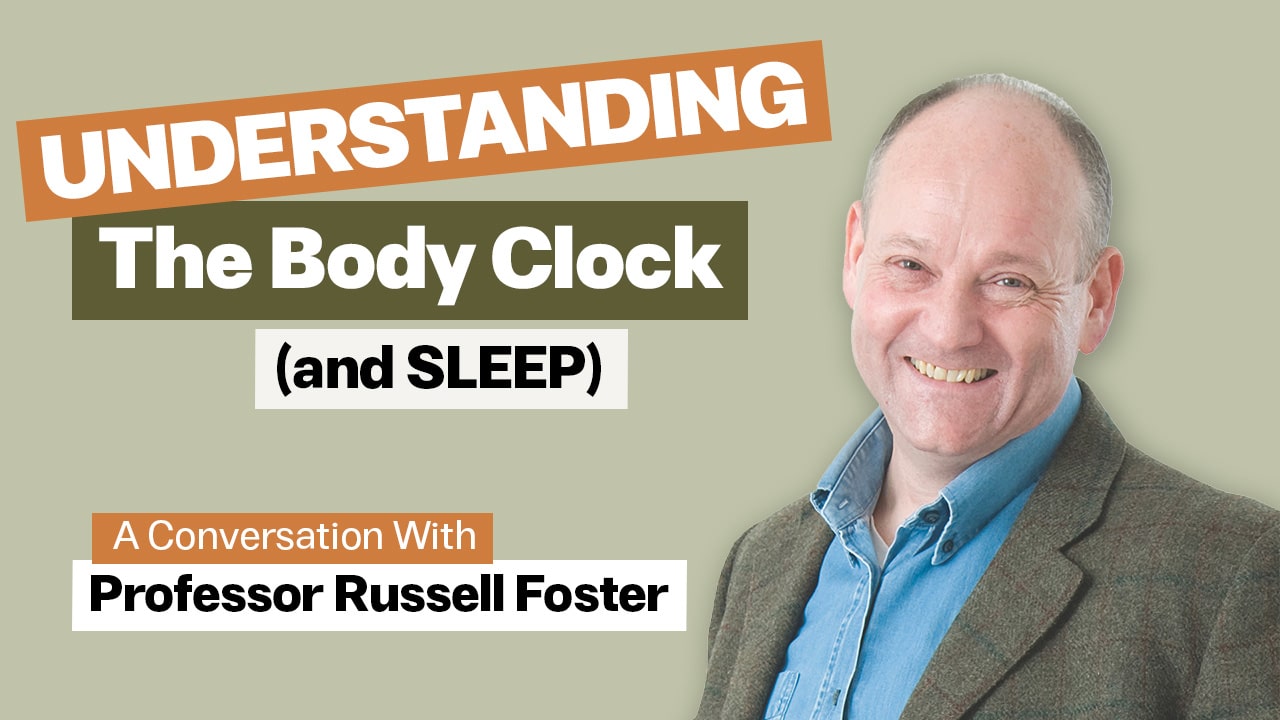
In this fascinating conversation, Professor Russell Foster, Professor of Circadian Neuroscience at Oxford University, reveals the science behind our body clock and its profound impact on health. As the discoverer of the third light-sensing system in the eye, Prof. Foster shares groundbreaking sleep science insights into how light regulates our sleep-wake cycles and debunks common myths about blue light and sleep apps. This episode provides evidence-based strategies for optimising your circadian rhythm for better sleep, cognitive performance, and long-term health.
Key Body Clock & Sleep Science Insights:
- Your Body Clock Controls your biology: From immune function to cognitive performance, your circadian rhythm regulates far more than just sleep - it's the conductor orchestrating your entire biology
- The Discovery of a Third Eye System: Professor Foster's research revealed photosensitive retinal ganglion cells that detect environmental brightness specifically for regulating our body clock
- Blue Light Myths Debunked: The panic about blue light from screens is largely unfounded - you need bright light for long durations to significantly affect your circadian rhythm
- Chronotypes Are Real: Whether you're a lark, owl, or dove is determined by genetics, age, hormones, and light exposure - with important implications for work and health
- Modern Life Disrupts Natural Rhythms: We've retreated indoors where light levels are 50-100 times dimmer than natural morning light, weakening our circadian signals
- The Cost of Disruption: Poor sleep and circadian misalignment increase risks of cardiovascular disease, diabetes, cancer, depression, and dementia
Want the complete framework?
Get The Vital 3 Method guide free — the evidence-based system for sustainable health after 40.
Practical Body Clock & Sleep Science Takeaways:
- Get a "photon shower" of morning light - 10,000 lux for 30 minutes or go outside shortly after dawn
- Stop drinking coffee by 2-3pm as caffeine can last 5-9 hours in your body
- Keep naps to 20 minutes maximum to avoid disrupting nighttime sleep pressure
- Maintain consistent bedtimes and wake times, including weekends
- Create a bedroom cocoon - cool (17-18°C), dark, quiet, and free of electronic devices
- Reduce light levels 30 minutes before bedtime, but complete darkness isn't necessary
- Don't rely on sleep apps - they're largely inaccurate and can increase sleep anxiety
- If you wake during the night, stay relaxed - biphasic sleep is normal, especially as we age
About Our Guest
Professor Russell Foster is Professor of Circadian Neuroscience and Director of the Sleep and Circadian Neuroscience Institute at Oxford University. He also heads the Nuffield Laboratory of Ophthalmology at the Oxford Eye Hospital. Professor Foster's groundbreaking research led to the discovery of the third light-sensing system in the mammalian eye, revolutionising our understanding of how light regulates our body clock. His work has earned international recognition and numerous awards for advancing sleep science and circadian biology.
Visit Professor Russell Foster's Academic Profile

Watch the 'Ultra Processed Foods' Interview
Body Clock and Sleep Science Resources
You can buy Professor Foster's book "Life Time" here:
Amazon US https://amzn.to/4qRw1Kz**
Amazon UK https://amzn.to/3NiyH5y**
** I only recommend products I actually use and love. Some links are affiliate links that help keep this channel running. Thank you for supporting the channel!
ONLINE CBT-i COURSE: if you struggle to sleep despite all recommended sleep behaviours, you may be suffering from insomnia. The best treatment is Cognitive Behavioural Therapy for Insomnia (CBT-i) - you can access my online CBT-i course here: https://sleepmentor.co.uk
It's not about willpower
A doctor's guide to healthy living and making it stick
What's inside
- Why healthy living matters for you and your loved ones
- The actions that make a difference - not 100 biohacks that don't!
- My exact program that helped me lose 14kg in weight, reverse my metabolic age, and feel in the best shape of my life
- Tips on using AI to supercharge your lifestyle changes
I will not share your details with any third party
Additional Interviews
Are you interested in other expert interviews on health, wellness and longevity topics? Click on the links below to discover more.
Sleep
The most under-rated life pillar of all!
Exercise
The foundation of lasting health
Nutrition
The fuel that shapes your wellbeing