
Episode Overview
In this essential conversation, Professor Bernadette Moore, a nutritional biochemist at the University of Liverpool with over two decades researching obesity and liver health, explains why fatty liver disease has become a silent epidemic affecting nearly one in three people globally. Prof. Moore reveals how this condition—now renamed metabolic dysfunction-associated steatotic liver disease—dramatically increases cardiovascular risk and can progress to serious complications, yet remains reversible with surprisingly modest interventions. Challenging the all-or-nothing diet culture, she shares evidence-based strategies focusing on adding beneficial foods rather than restriction, and explains why even 3-5% weight loss can transform liver health. This interview offers practical, sustainable approaches for anyone concerned about metabolic health and longevity.
Key 'Fatty Liver Disease' Insights:
- It's Now a Global Epidemic: Approximately 30% of the world's population now has steatotic liver disease, with prevalence closely tracking obesity rates. In the UK, around 24-25% of people are affected.
- Cardiovascular Risk Is the Real Danger: While liver cirrhosis is concerning, fat in the liver more significantly increases risk of heart attacks, stroke, and reduced overall mortality. It's a whole-body metabolic problem, not just a liver issue.
- Genetics Load the Gun, Environment Pulls the Trigger: Multiple genetic variants affect liver disease susceptibility, but they're not destiny. Environmental factors—diet, activity levels, weight—determine whether those genetic risks ever manifest.
- Women's Risk Surges After Menopause: While men have higher overall prevalence, women's risk dramatically increases with menopause due to the loss of protective estrogen. Post-menopausal women also tend to develop more severe disease than men.
- Small Weight Loss Delivers Big Results: You don't need to become slim—just 3-5% body weight loss can significantly improve liver health. This is far more achievable than the dramatic transformations diet culture promotes.
- Saturated Fat Particularly Harms the Liver: Despite social media debates, the evidence is clear: saturated fat is particularly damaging to both liver and heart health. Switching to olive oil or cold-pressed rapeseed oil offers genuine benefits.
- Don't Drink Your Calories: Liquid calories from sugary drinks, juice, alcohol, or even sugar in tea access the liver rapidly and are among the quickest wins for improving liver health.
Want the complete framework?
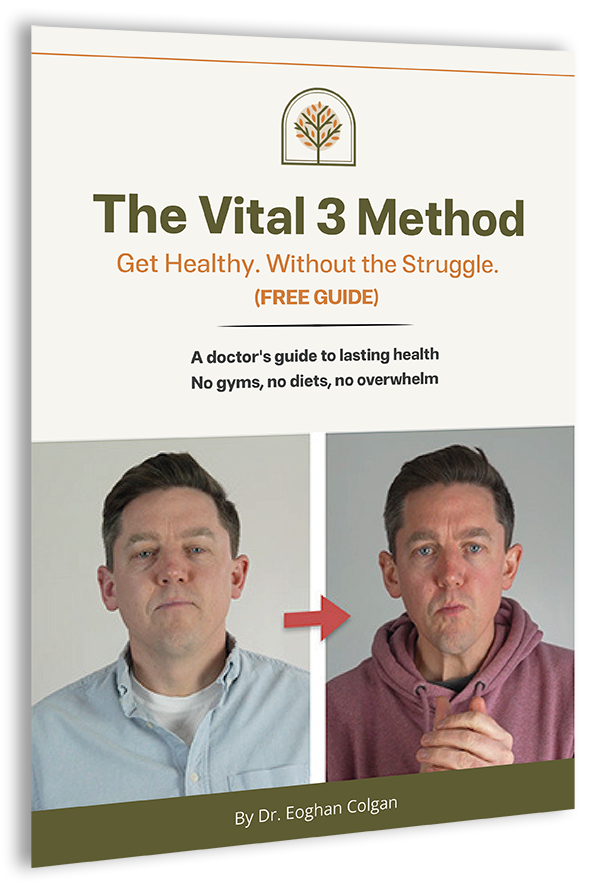
Get The Vital 3 Method guide free — the evidence-based system for sustainable health after 40.
Expert 'Fatty Liver Disease' Takeaways
- Focus on adding beneficial foods—vegetables, nuts, seeds, beans, and fruit—rather than obsessing over what to eliminate, as this naturally crowds out less helpful choices
- Stop drinking your calories as a first priority: eliminate or reduce sugary drinks, fruit juice, alcohol, and sugar in tea or coffee
- Take a 20-minute walk after dinner to improve glycemic response and support liver metabolism—simple activity that doesn't require gym membership
- Monitor your waist circumference or trouser size rather than obsessing over scales; this is a better proxy for metabolic risk than weight alone
- Switch from saturated fats to olive oil or cold-pressed rapeseed oil for cooking—the fatty acid profile is nearly identical to olive oil at lower cost
- Weigh yourself weekly rather than daily to track trends without becoming obsessive, and use the data to make small adjustments before weight creeps up
- Consider hormone replacement therapy if you're a woman who has gained significant weight during perimenopause without dietary or lifestyle changes—discuss cardiovascular and liver protection with your healthcare provider
- If prescribed GLP-1 medications, pair them with nutrition and lifestyle changes to maintain benefits if you eventually discontinue the drugs
About Our Guest
Professor Bernadette Moore is a nutritional scientist at the University of Liverpool, specialising in nutritional biochemistry with a PhD from Florida. With over 20 years researching obesity and metabolic disease, her work focuses on how dietary nutrients interact at a cellular level to influence either health and longevity or disease development. Prof. Moore's research group has conducted comparative studies on exercise versus dietary interventions for liver disease, contributing to our understanding of how lifestyle modifications can reverse steatotic liver disease. Her passion for nuanced, evidence-based communication stands in contrast to the polarised debates dominating social media, making her a vital voice for accessible metabolic health science.

Watch the 'Fatty Liver Disease' Interview
'Fatty Liver Disease' Resources
Key Research Discussed:
- The DiRECT Trial approach — Referenced as the Roy Taylor and Mike Lean intensive weight loss protocol using meal replacements that can put type 2 diabetes and fatty liver disease into complete remission
- WHO New Obesity Diagnostic Criteria (2023) — Updated criteria combining BMI with waist circumference for better adiposity assessment
- 2023 Nomenclature Consensus — The international process that renamed non-alcoholic fatty liver disease to metabolic dysfunction-associated steatotic liver disease (MASLD)
Programmes & Approaches Mentioned:
- Continuous Glucose Monitoring — For real-time feedback on how walking after meals affects glycemic response
Relevant Organisations:
- University of Liverpool — Prof. Moore's research institution
- NICE (National Institute for Health and Care Excellence) — UK body recommending HRT as first-line therapy for menopausal symptoms
It's not about willpower
A doctor's guide to healthy living and making it stick
What's inside
- Why healthy living matters for you and your loved ones
- The actions that make a difference - not 100 biohacks that don't!
- My exact program that helped me lose 14kg in weight, reverse my metabolic age, and feel in the best shape of my life
- Tips on using AI to supercharge your lifestyle changes
I will not share your details with any third party
More conversations with leading scientists
Browse all the interviews by topic: sleep, nutrition, exercise and more.